https://dx.doi.org/10.24016/2026.v12.476
ORIGINAL ARTICLE
Influence of satisfaction with family life and child-parental violence
on school satisfaction among Peruvian high school students
Magali Rodríguez Guevara1, Giovanny Aracelly Mendoza Castro1,
Sara Esther Richard Pérez1, Julio Cjuno1*
1 Universidad Peruana
Unión, Escuela de Posgrado, Lima, Peru.
* Correspondence: jcjunosuni@gmail.com
Received: August 07, 2025 | Revised: December 26, 2025 | Accepted:
March 06, 2026 | Published Online: March 09, 2026.
CITE IT AS:
Rodríguez Guevara, M., Mendoza Castro, G. A., Richard
Pérez, S. E., & Cjuno, J. (2026). Influence of satisfaction with family life and
child-parental violence on school satisfaction among Peruvian high school
students. Interacciones, 12, e476. https://doi.org/10.24016/2026.v12.476
ABSTRACT
Background: Within the family context, one of the problems that
has gained particular relevance in adolescence is child-to-parent violence,
understood as physical, verbal, or psychological behaviors perpetrated by
children against their parents. Despite existing evidence, a knowledge gap
persists regarding the combined effect of family life satisfaction and
child-to-parent violence on school satisfaction, especially in Latin American
contexts.
Objective: This study aimed to determine the
association between satisfaction with family life and child-to-parent violence
on school satisfaction among secondary school students in Nueva Cajamarca,
Peru.
Method: An analytical-correlational study
was conducted, testing a structural model of relationships between variables
using SEM. Participants were selected through non-probability sampling,
including 497 secondary school students from Nueva Cajamarca, Peru.
Result: The average age was 14 years, with
the majority being female (255 students, or 51.3%), and 276 students (55.5%)
reporting living with both parents. The instruments used were the High School
Satisfaction Scale (H-SatP Scale), the Brief Child-to-Parent Violence Scale,
and the Satisfaction with Family Life Scale (SWFLS).
Conclusion: The results revealed that
satisfaction with family life had a significant positive effect on school
satisfaction, while child-to-parent violence had a negative effect. This
suggests that satisfaction with family life serves as a protective factor for
school satisfaction, while child-to-parent violence represents a risk factor
for school satisfaction.
Keywords: Violence,
Child-to-parent violence, school satisfaction, family satisfaction.
INTRODUCTION
Adolescence is a critical stage of human development,
characterized by profound biological, psychological, and social changes that
directly impact overall well-being and school adjustment. During this period,
well-being is expressed as a perception of emotional, social, and academic
equilibrium, with school satisfaction being a key indicator of psychosocial
adjustment and engagement with the educational experience (Sawyer et al.,
2018). Empirical evidence shows that a lack of family support and the presence
of dysfunctional relationships are associated with low academic performance,
school dissatisfaction, and a higher risk of absenteeism and dropout (Heinze et
al., 2017; Pedditzi, 2024). In contrast, emotional family support acts as a
protective factor that fosters academic motivation, reduces social anxiety, and
promotes a more satisfying school experience (Halidu & Kotera, 2024).
Within the family context, one of the problems that
has gained particular relevance in adolescence is child-to-parent violence,
understood as physical, verbal, or psychological behaviors perpetrated by
children against their parents (Beckmann et al., 2017). Previous studies
indicate that this form of violence is associated with authoritarian or
neglectful parenting styles, a lack of emotional warmth, and prior exposure to
dynamics of domestic violence (Calvete et al., 2015; Cano-Lozano et al., 2020;
Suárez-Relinque et al., 2019). Furthermore, the adolescent's perception of poor
communication, high levels of criticism, and parental rejection increases the
likelihood of violent behavior toward parents, negatively impacting the family
climate and psychosocial adjustment (Jiménez García-Escribano et al., 2022).
On the other hand, satisfaction with family life has
been consistently identified as a protective factor in adolescent development.
Previous research indicates that high levels of family satisfaction are
associated with better interpersonal relationships in the school environment, a
higher academic self-concept, and higher educational aspirations
(Caycho-Rodríguez et al., 2022; Povedano-Díaz et al., 2020). Furthermore,
adequate family functioning, characterized by cohesion and positive
communication, contributes to reducing negative emotions and preventing
problematic behaviors, including parent-child violence (Hassouneh &
Zeiadeh, 2019; Izzo et al., 2022).
Despite existing evidence, a knowledge gap persists
regarding the combined effect of family life satisfaction and child-to-parent
violence on school satisfaction, especially in Latin American contexts. In
Peru, this gap is particularly relevant considering recent indicators of school
dropout rates and the influence of family violence on the education system
(Instituto Nacional de Estadística e Informática [INEI], 2023). Therefore, the
objective of this study is to determine the influence of family life satisfaction
and child-to-parent violence on school satisfaction among secondary school
students, using a cross-sectional predictive design. It is expected that
greater family life satisfaction will be positively associated with school
satisfaction, while child-to-parent violence will be negatively related,
providing useful empirical evidence for the design of preventive interventions
in the family and educational spheres. By identifying child-to-parent violence
as a risk factor and satisfaction with family life as a protective factor for
school satisfaction, this study provides an empirical basis for targeted
interventions. The findings support family-focused strategies aimed at
improving communication, strengthening positive parenting, and promoting school
well-being through greater family engagement.
METHODS
Design
This research is analytical-correlational because a
structural model of relationships between variables was tested using SEM. The
design is non-experimental because the study variables were not manipulated in
any way. It is cross-sectional because the data collection instrument was
applied only once (Gravetter & Forzano, 2018).
Participants
Students enrolled in the 2024 academic year at the
Manuel Fidencio Hidalgo Flores Educational Institution, located in the city of
Nueva Cajamarca, Peru, participated in the study. A non-probabilistic
convenience sampling method was used (Hernández-Sampieri & Mendoza, 2020).
All participants provided informed consent from a parent or guardian and gave
their informed assent. Students who did not fully complete the survey were
excluded. The educational institution was selected primarily based on accessibility
and feasibility, as it had institutional authorization, the support of
educational authorities, and the necessary logistical conditions for data
collection.
Instruments
To assess school satisfaction, the High-school
Satisfaction Scale (H-SatP Scale) was used, originally created by Lodi et. al.
(2017) and adapted to the Peruvian context by (Gonzales-Valdivia et al., 2022).
The scale has five dimensions: suitability of choice (CH), quality of school
services (SE), peer relations (RE), effectiveness of study habits (TS) and
usefulness for a future career (CA). The five dimensions group 20 items with
Likert-type response options (1 = not at all, 2 = little, 3 = somewhat, 4 = a
lot, and 5 = completely). In addition, this instrument has reported adequate
evidence of internal structure validity (CFI = 0.982, TLI = 0.978, RMSEA =
0.065, SRMR = 0.032) as well as optimal reliability by McDonald's Omega (CH=
0.89, SE= 0.87, RE= 0.91, TS= 0.90, AC= 0.94).
Child-to-parent violence was assessed using the Brief
Scale of Child-to-Parent Violence originally created by Ibabe & Jaureguizar
(2011), in its version that was adapted for Peruvian high school students
(Villarreal-Zegarra et al., 2023). This instrument has one dimension and 6
items with Likert-type response options ranging from never = 1 to Many times =
5. Regarding its validity evidence, it has been found that it presents adequate
goodness-of-fit indices (CFI = 0.995; RMSEA = 0.074) and acceptable reliability
by means of the Omega McDonald coefficient (w = 0.70).
Satisfaction with family life was assessed using the
Satisfaction with Family Life Scale (SWFLS) originally constructed by Zabriskie
& Ward (2013) and adapted in Peruvian adolescents (Caycho-Rodríguez et al.,
2022). It has a single factor; which contains 5 items seven response categories
in Likert format (1= strongly disagree; 2 = disagree; 3= slightly disagree; 4=
neither agree nor disagree; 5= slightly agree; 6= agree; 7 = strongly agree).
It has evidence of internal structure validity (CFI = 1.00; RMSEA = 0.00, SRMR
= 0.01) as well as reliability (α = .84, ω = 0.84).
Procedure
After obtaining authorization from the institution's
educational authorities and approval from the Ethics Committee, two
interviewers, previously trained in data collection techniques, presented the
study using informed consent forms from parents, which were distributed to
students a few days prior to the survey. Students who provided parental
informed consent and their own informed assent participated. The survey was
administered via Google Forms in the institution's computer lab; students
answered the questionnaire in classroom groups. The data collection process
lasted two weeks, during June 2024.
Analysis plan
In the descriptive analyses, central tendency and
dispersion analyses were performed for the numerical variables, as well as
determined by the values of the asymmetry considering g1 < ± 2.0 for a
normal distribution; while for categorical variables, frequencies and
percentages were estimated. Likewise, the reliability of the study variables
and their dimensions was estimated using Cronbach's alpha and McDonald's omega
coefficients, considering values greater than 0.70 as indicators of adequate
reliability.
After that, in the inferential analysis, Pearson's
correlation coefficient was used to determine the correlation between the
variables that will enter the Structural Equation Model (SEM). The SEM was
specified to examine the direct effects of satisfaction with family life and
child-to-parent violence on school satisfaction, testing a structural model in
which satisfaction with family life and child-to-parent violence acted as
exogenous latent variables, and school satisfaction as an endogenous latent variable.
The dimensions of each construct, measured through their respective scales
(SWFLS, Child-to-Parent Violence Scale, and H-SatP Scale), were included as
observed indicators of the latent variables.
Once the reliability and relationships of the
variables were verified, the modeling of SEM Structural Equations was developed
considering the Maximum Likelihood Ratio (MRL) estimator, which was selected
due to its robustness and suitability for continuous variables with
approximately normal distribution, on the other hand, an adequate Comparative
Fit Index (CFI) and Tucker-Lewis Index (TLI) > 0.95 were evidenced, as well
as the Root of the Mean Square Error of Approximation (RMSEA) and Mean Square
Root of the Standard Remainder (SRMR) < 0.08, following conventional cutoff
criteria recommended in the SEM literature to determine acceptable model fit.
All analyses were performed with the statistical software R Studio version
2024.12.1+563, as well as the statistical packages Lavaan, Psych, Semtools and
Semplot.
Ethical aspects
This study was evaluated by the Ethics Committee of
the Graduate School of the Universidad Peruana Unión and approved with Report
No. 2024-CEEPG-00069. Likewise, the research team guarantees that all the
ethical principles of research on human beings of the Declaration of Helsinki
(World Medical Association, 2018) were respecte, such as autonomy, through the
use of parental informed consent and the informed assent of adolescents; as
well as the principle of confidentiality due to the fact that no data identifying
the participants is disclosed and the principle of justice due to the fact that
the participants are not disclosed. that our study did not pose a risk to the
participants.
RESULTS
Table 1 presents the sociodemographic characteristics
of the sample, which consisted of 497 students, with a mean age of 14.44 years
(SD = 6.34). The majority were female (n = 255; 51.3%), had between 3 and 5
siblings (n = 260; 52.3%), were in their second year of secondary school (n =
144; 29.0%), and lived with both parents (n = 276; 55.5%).
Table 1. Characteristics of secondary
school students.
|
|
|
M |
SD |
|
Age |
14.44 |
6.34 |
|
|
|
|
N |
% |
|
Sex |
Woman |
255 |
51.3 |
|
|
Man |
242 |
48.7 |
|
Number of siblings |
Only child |
25 |
5 |
|
1 to 2 siblings |
174 |
35 |
|
|
3 to 5 siblings |
260 |
52.3 |
|
|
|
6 or more siblings |
38 |
7.6 |
|
Year of study |
First |
89 |
17.9 |
|
Second |
144 |
29 |
|
|
Third |
113 |
22.7 |
|
|
|
Fourth |
82 |
16.5 |
|
Live with... |
Both parents |
276 |
55.5 |
|
Parent (only one) |
142 |
28.6 |
|
|
Parents, uncles,
grandparents, cousins |
33 |
6.6 |
|
|
One of my parents and his
partner |
46 |
9.3 |
In the descriptive analysis of the variables of
interest, child-to-parent violence has the lowest mean (M = 6.73, SD = 1.77),
while satisfaction with family life has the highest mean (M = 25.03, SD =
7.16). Regarding the analysis of normality, all variables meet the expected
criteria (g₁ and g₂ between -2 and 2), except for child-to-parent
violence in kurtosis (g₂ = 2.2), however, this does not affect normality
that can be determined by asymmetry alone (Cain et al., 2017); while the reliability
of the scales are adequate, with coefficients of α (0.705 - 0.835) and
ω (0.711 - 0.843) (see Table 2).
Table 2. Descriptive analysis of the
variables of interest
|
Variable |
M |
SD |
g1 |
g2 |
α |
ω |
|
Child-to-parent violence |
6.73 |
1.77 |
1.8 |
2.2 |
0.72 |
0.72 |
|
Satisfaction with family
life |
25.03 |
7.16 |
-0.9 |
0.2 |
0.84 |
0.84 |
|
Appropriateness of choice |
13.95 |
3.63 |
-0.2 |
-0.7 |
0.72 |
0.72 |
|
Quality of school services |
15.31 |
3.31 |
-0.6 |
-0.3 |
0.71 |
0.71 |
|
Peer Relationships |
15.16 |
3.47 |
-0.5 |
-0.5 |
0.78 |
0.78 |
|
Effectiveness of study
habits |
14.57 |
3.58 |
-0.4 |
-0.6 |
0.72 |
0.72 |
|
Usefulness for a future
career |
15.27 |
3.48 |
-0.6 |
-0.3 |
0.72 |
0.72 |
In the bivariate analysis, statistically significant
relationships were observed between child-to-parent violence, satisfaction with
family life, and school satisfaction, considering the latter and its dimensions
as dependent variables (p < .001). Specifically, child-to-parent violence
was inversely and weakly associated with school satisfaction (r = −.167
to −.215), whereas satisfaction with family life showed direct and
moderate relationships with school satisfaction (r = .382 to .433), as shown in
Table 3.
Table 3. Relationships
between study variables
|
|
Child-to-parent violence |
Satisfaction with family
life |
|
Appropriateness of choice |
-0.215** |
0.391** |
|
Quality of school services |
-0.167** |
0.382** |
|
Peer Relationships |
-0.174** |
0.415** |
|
Effectiveness of study
habits |
-0.187** |
0.398** |
|
Usefulness for a future
career |
-0.181** |
0.396** |
|
School satisfaction |
-0.202** |
0.433** |
Note: Pearson
correlation was used. ** p<0.001
The SEM model shows that satisfaction with family life
has a positive and significant effect on school satisfaction (β = 0.42),
while violence from children to parents has a negative effect (β =
−0.14). School satisfaction is defined as a latent construct measured by
five indicators, all of which have high factor loadings, demonstrating adequate
representation of the construct. Specifically, usefulness for a future career,
effectiveness of study habits, and relationships with peers show factor
loadings of λ = 0.90, while the quality of school services (λ = 0.89)
and the suitability of the school choice (λ = 0.88) also have high values.
Overall, these results indicate adequate convergent validity of the measurement
model. Furthermore, the overall fit indices reflect an excellent fit of the
model to the data (CFI = 0.999, TLI = 1.009, RMSEA = 0.000, 90% CI =
0.000–0.022, SRMR = 0.009), which supports the suitability of the proposed
structure (Figure 1).
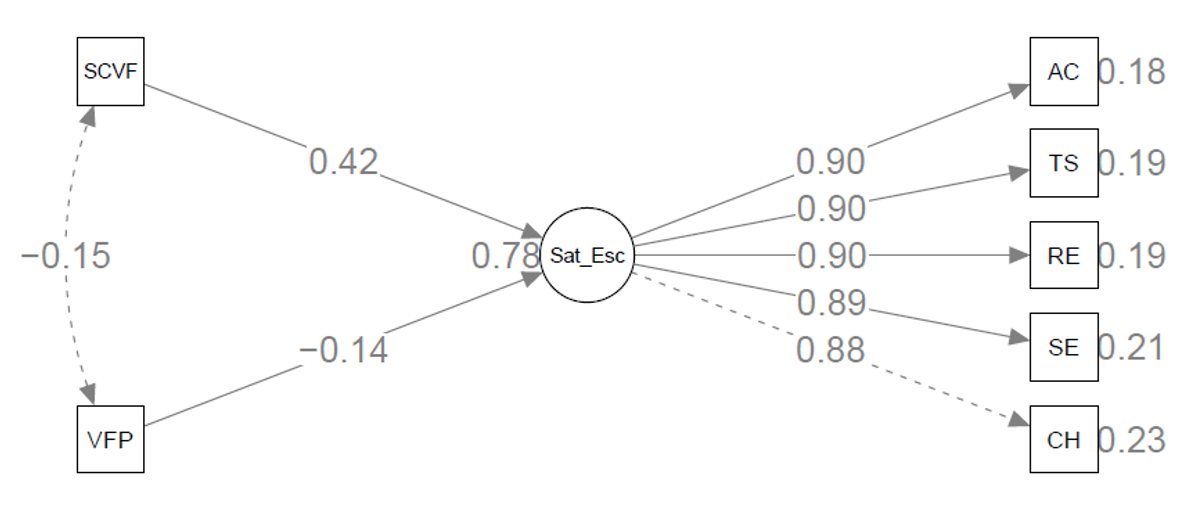
Figure 1. SEM graph of the studied model.
Note: SVVF: Satisfaction with family life, VFP:
Child-to-parent violence, Sat_Esc: School satisfaction, CH: suitability of
choice, SE: quality of school services, RE: relationships with peers, TS:
effectiveness of study habits, and AC: usefulness for a future career.
DISCUSSION
The objective of this study was to determine whether
satisfaction with family life and child-to-parent violence influence school
satisfaction in secondary school students. The results showed that there is an
adequate fit in a model where satisfaction with family life has a significant
positive effect on school satisfaction, while child-parent violence has a
negative effect.
Child-to-parent violence has a negative effect on
school satisfaction; that is, the more violence between children and parents
increases, the lower school satisfaction will be. Children's violence towards
parents can be due to an aggressive personality, a rigorous parenting style,
and violence, being a spectator or participant in peer violence (Junco-Guerrero
et al., 2023). Exposure to violence in parenting generates a moral
disconnection that generates a lack of respect for parents, which can lead to situations
of violence between children and their parents and generates disinterest in
school activities, especially in adolescence (Bautista-Aranda et al., 2023),
which can even end in school dropout (Pedditzi et al., 2022). This finding
highlights the influence of healthy relationships in the family on school satisfaction.
In this regard, a systematic review found direct and significant effects of
exposure to domestic violence as a risk factor for academic achievement that
would be an indicator of school satisfaction (Supol et al., 2021).
Similarly, a qualitative study found that exposure to
family violence has direct and indirect negative effects on the academic
performance of adolescents. This impact can manifest itself through a decrease
in the effectiveness of study habits due to the lack of a supportive
environment and emotional stability at home (Sonsteng-Person et al., 2023). For
some scholars, child-parent violence is the result of past events, traumatic
experiences of violence on the part of parents, or having witnessed violence
between parents; The act of violence directed towards parents is a way of
relieving the stress they carry due to parental pressure or correctly or
incorrectly perceived injustices. This affects interest in studying and
distorts study habits (Okamura, 2016); Another qualitative study indicates that
child-to-parent violence is a way to relieve parental stress and abrupt changes
in parenting styles that end up affecting all aspects of an adolescent's
development, including their study habits due to a lack of interest in the
academic area (Kinsworthy & Garza, 2010). The stress generated by parents
seems to be the triggering factor of child-parent violence (Jiménez et al.,
2019), which should be studied in further research.
This study also showed that family satisfaction has a
positive effect on school satisfaction, indicating that the greater the
satisfaction with family life, the greater the school satisfaction.
This finding is like the one found in Turkey, a study
where it was evidenced that satisfaction with family life directly influenced
career decision-making and the perception of future opportunities. Students who
report high levels of family satisfaction tend to have a more positive view of
the education received and its importance (Aslan & Koçak, 2023); another
study in Brazil found that satisfaction with family life is positively
correlated with the perception of usefulness of the study and success in the future
professional career, suggesting that a positive family environment provides the
emotional foundation of the adolescent (Vautero et al., 2021).
This finding can also be explained by social cognitive
theory, expectations and family support play a crucial role in students'
self-efficacy and life satisfaction. This theory postulates that a high level
of satisfaction with family life improves students' confidence in their
academic and professional abilities, which in turn increases the perception of
the usefulness of their studies for their future career (Bandura, 1986). On the
other hand, attachment theory suggests that early and secure relationships with
parents are fundamental to children's emotional and social development;
likewise, it assumes that secure attachment styles are associated with better
coping skills and healthy interpersonal relationships (Mendiola, 2008).
Likewise, the positive family environment that has generated microsystems that
provide security, emotional support, rules, and healthy habits Contributes
directly to the school experience, reflecting on better academic performance
(Lui et al., 2020).
Limitations and strengths
The present research is subject to some limitations
such as the sample, which because it is not probabilistic its results cannot be
generalized to the entire population of Peruvian high school students, however.
One limitation of this study is the exclusion of relevant covariates from the
analytical model, such as sociodemographic or contextual variables, which could
influence school satisfaction. While this decision allowed for a parsimonious
model focused on the main relationships of interest, the omission of these
variables may have limited the complete explanation of the phenomenon. Future
studies should incorporate invariance analyses for sociodemographic and
contextual variables for greater certainty. Finally, further studies could use
SEM modeling to be able to more accurately explore these findings.
Conclusions and recommendations
The results of the SEM model show that satisfaction
with family life is positively associated with school satisfaction, while
child-parent violence is negatively associated. School satisfaction was
explained by five indicators with high factor loads. The adjustment indices
confirm the soundness of the proposed model. It is concluded that strengthening
the family environment could be key to improving school satisfaction in
adolescents.
In view of this, subsequent studies could explore
other family variables such as communication and parenting styles in the
predictive model of school satisfaction; Likewise, efforts should be made to
develop interventions focused on family relationships for better school
satisfaction of secondary school students in educational institutions.
ORCID
Magali Rodríguez Guevara: https://orcid.org/0009-0005-7475-4774
Giovanny Aracelly Mendoza Castro: https://orcid.org/0009-0008-2656-4337
Sara Esther Richard Pérez: https://orcid.org/0000-0002-7859-4748
Julio Cjuno: https://orcid.org/0000-0001-6732-0381
AUTHORS’ CONTRIBUTION
Magali Rodríguez
Guevara: Conceptualization, methodology, validation, formal analysis,
investigation, data curation, writing - original draft, writing - review &
editing.
Giovanny Aracelly
Mendoza Castro: Conceptualization, methodology, validation, formal analysis,
investigation, data curation, writing - original draft, writing - review &
editing.
Sara Esther Richard
Pérez: Methodology, validation, investigation, writing - original draft,
writing - review & editing.
Julio Cjuno:
Methodology, validation, investigation, writing - original draft, writing -
review & editing
FUNDING
SOURCE
Self-funded by researchers.
CONFLICT
OF INTEREST
The authors declare that they have no
conflict of interest.
ACKNOWLEDGMENTS
Not applicable.
REVIEW
PROCESS
This study has been reviewed by Carlos Narváez Gaitán, SettingsAmmy
Reyes, and Leonardo Andrés Aguilar in double-blind mode. The editor in charge was
Renzo Rivera. The review process is included as supplementary material 1.
DATA AVAILABILITY
STATEMENT
Available in: https://doi.org/10.5281/zenodo.16740722.
DECLARATION OF THE USE OF GENERATIVE ARTIFICIAL INTELLIGENCE
The authors declare that we have not used artificial intelligence in
any part of the manuscript.
DISCLAIMER
The authors are responsible for all statements made in this article.
REFERENCES
Aslan, Y., & Koçak, O. (2023). How do family influence on career
choices and perceived social support affect students’ life satisfaction in
Turkey? The role of vocational outcome expectations as mediator. International
Journal for Educational and Vocational Guidance, 25, 1 - 18.
https://doi.org/10.1007/s10775-023-09602-1
World
Medical Association (2018). Declaración
de Helsinki de la AMM: Principios éticos para las investigaciones médicas en
seres humanos. www.wma.net
Bandura, A. (1986). Social foundations of thought
and action: A social cognitive theory. Prentice-Hall.
http://archive.org/details/socialfoundation0000band
Bautista-Aranda,
N., Contreras, L., & Cano-Lozano, M. C. (2023). Exposure to Violence during Childhood and
Child-to-Parent Violence: The Mediating Role of Moral Disengagement.
Healthcare, 11(10). https://doi.org/10.3390/healthcare11101402
Beckmann, J., Bergmann, M., Fischer, F., & Mößle,
T. (2017). Child-to-parent violence: Parent–child violence and parenting
styles. European Journal of Psychology Applied to Legal Context, 9(2),
43–54. https://doi.org/10.1016/j.ejpal.2017.02.001
Cage, J., Kobulsky, J. M., McKinney, S. J., Holmes, M.
R., Berg, K. A., Bender, A. E., & Kemmerer, A. (2022). The Effect of
Exposure to Intimate Partner Violence on Children’s Academic Functioning: A
Systematic Review of the Literature. Journal of Family Violence, 37(8),
1337-1352. https://doi.org/10.1007/s10896-021-00314-0
Cain, M. K., Zhang, Z., & Yuan, K.-H. (2017).
Univariate and multivariate skewness and kurtosis for measuring nonnormality:
Prevalence, influence and estimation. Behavior Research Methods, 49(5),
1716-1735. https://doi.org/10.3758/s13428-016-0814-1
Calvete, E., Orue, I., Gámez-Guadix, M., Hoyo-Bilbao,
J. D., & de Arroyabe, E. L. (2015). Child-to-Parent Violence: An
Exploratory Study of the Roles of Family Violence and Parental Discipline
Through the Stories Told by Spanish Children and Their Parents. Violence
and Victims, 30(6), 935 - 947. https://doi.org/10.1891/0886-6708.VV-D-14-00105
Cano-Lozano,
M. C., Rodríguez-Díaz, F. J., León, S. P., & Contreras, L. (2020). Analyzing the Relationship Between Child-to-Parent
Violence and Perceived Parental Warmth. Frontiers
in Psychology, 11,
Artículo 590097.
https://doi.org/10.3389/fpsyg.2020.590097
Caycho-Rodríguez,
T., Neto, F., Reyes-Bossio, M., Vilca, L. W., García Cadena, C. H., Pinto da
Costa, M., Neto, J., & White, M. (2022). Factorial invariance of Satisfaction with Family Life
Scale in adolescents from Peru and Portugal. The Journal of General
Psychology, 149(4), 421-442.
https://doi.org/10.1080/00221309.2020.1867496
Elsaesser, C., Russell, B., Ohannessian, C. M., &
Patton, D. (2017). Parenting in a digital age: A review of parents' role in
preventing adolescent cyberbullying. Aggression and violent behavior, 35,
62-72. https://doi.org/10.1016/j.avb.2017.06.004
Gravetter, F. J., & Forzano, L. B. (2018). Research
methods for the behavioral sciences (6th ed.). Cengage
Learning.
Gonzales-Valdivia,
J., Morales-García, W. C., Saintila, J., Huancahuire-Vega, S., Morales-García,
M., & Ruiz-Mamani, P. G. (2022). Translation and validation of the High-School Satisfaction Scale (H-SatP
Scale) in Peruvian students. Frontiers in Education, 7, Article
1003378. https://doi.org/10.3389/feduc.2022.1003378
Halidu, M. D., & Kotera, Y. (2024). Adolescent
Social Anxiety, School Satisfaction, Family Emotional Support, and School
Absenteeism. Journal of Clinical Medicine, 13(9), 2547.
https://doi.org/10.3390/jcm13092547
Hassouneh, N. A., & Zeiadeh, A. R. (2019). The
Level of Satisfaction with Family Life and Self-Satisfaction among a Sample of
Syrian Refugees in Jordan. Journal of Education and Learning, 8(2),
98-110. https://eric.ed.gov/?id=EJ1207306
Hernández-Sampieri,
R., & Mendoza, C. (2020). Metodología de la investigación: las rutas
cuantitativa, cualitativa y mixta. Mc Graw Hill. https://biblioteca.uazuay.edu.ec/buscar/item/63241
Heinze, J. E., Stoddard, S. A., Aiyer, S. M., Eisman,
A. B., & Zimmerman, M. A. (2017). Exposure to violence during adolescence
as a predictor of perceived stress trajectories in emerging adulthood. Journal
of Applied Developmental Psychology, 49, 31-38.
https://doi.org/10.1016/j.appdev.2017.01.005
Hoyo-Bilbao, J. D., Orue, I., Gámez-Guadix, M.,
Calvete, E., Hoyo-Bilbao, J. D., Orue, I., Gámez-Guadix, M., & Calvete, E.
(2020). Modelos multivarible de violencia
filio-parental hacia la madre y hacia el padre entre adolescentes. The European Journal of Psychology Applied to Legal
Context, 12(1), 11-21.
hInttps://doi.org/10.5093/ejpalc2020a2
Ibabe,
I., & Jaureguizar, J. (2011). ¿ Hasta qué punto la violencia filio-parental
es bidireccional?. Anales de Psicología, 27(2), 265-277. https://www.redalyc.org/articulo.oa?id=16720051001
Instituto
Nacional de Estadística e Informática (2023). Pandemia
y deserción escolar en la Educación Básica Regular: Factores asociados y
posibles efectos, 2017–2021 [Pandemic and school dropout in regular basic
education: Associated factors and possible effects, 2017–2021].
https://www.gob.pe/es/institucion/inei/informes-publicaciones/4021058-pandemic-and-school-dropout-in-the-regular-basic-education-factors-associated-and-possible-effects-2017-2021
Izzo,
F., Baiocco, R., & Pistella, J. (2022). Children’s and Adolescents’ Happiness and Family
Functioning: A Systematic Literature Review. International Journal of
Environmental Research and Public Health, 19(24), 16593. https://doi.org/10.3390/ijerph192416593
Jiménez,
T. I., Estévez, E., Velilla, C. M., Martín-Albo, J., & Martínez, M. L.
(2019). Family communication and
verbal child-to-parent violence among adolescents: the mediating role of
perceived stress. International Journal of Environmental Research and Public
Health, 16(22), 4538. https://doi.org/10.3390/ijerph16224538
Jiménez
García-Escribano, P., Contreras Martínez, L. M., & Cano, M. del C. (2022).
¿Cómo influyen las dinámicas familiares en la violencia filio-parental en
adolescentes chilenos? En L. Rodríguez-Franco, D. Seijo, & F. Fariña
(Eds.), Ciencia psicológica al servicio de la justicia y la ley (pp.
279–292). Sociedad Española de Psicología Jurídica y Forense.
https://dialnet.unirioja.es/servlet/articulo?codigo=8732407
Junco-Guerrero,
M., Fernández-Baena, F. J., & Cantón-Cortés, D. (2023). Risk Factors for Child-to-Parent Violence: A Scoping
Review. Journal of Family Violence, 40(1), 139–164.
https://doi.org/10.1007/s10896-023-00621-8
Kinsworthy, S., & Garza, Y. (20Az10). Filial
Therapy with Victims of Family Violence: A Phenomenological Study. Journal
of Family Violence, 25(4), 423-429.
https://doi.org/10.1007/s10896-010-9303-y
Lodi, E., Boerchi, D., Magnano, P., & Patrizi, P.
(2017). College Satisfaction Scales (CSS): The mediating role of contextual
satisfaction on the relationship between self-efficacy and general life
satisfaction. Bollettino di Psicologia Applicata, 65(279),
51–64.
Lui,
M., Lau, G. K., Tam, V. C., Chiu, H.-M., Li, S. S., & Sin, K.-F. (2020). Parents’ Impact on Children’s School Performance:
Marital Satisfaction, Parental Involvement, and Mental Health. Journal of
Child and Family Studies, 29(6), 1548-1560.
https://doi.org/10.1007/s10826-019-01655-7
Mendiola,
R. (2008). Teoría del apego y psicoanálisis. Clínica y Salud, 19(1),
131_134.
https://scielo.isciii.es/scielo.php?pid=S1130-52742008000100007&script=sci_arttext&tlng=en
Okamura, R. (2016). Filial Violence: An Unrevealed
Problem for Decades. In F. Kumagai & M. Ishii-Kuntz (Eds.), Family
Violence in Japan: A Life Course Perspective (pp. 103-122). Springer.
https://doi.org/10.1007/978-981-10-0057-7_4
Ortega-Campos,
E., De la Fuente-Sánchez, L., Zaldívar-Basurto, F., Buestán-Játiva, M. E.,
& García-García, J. (2023). Predicting the Risk of
Re-Offending in Child-to-Parent Violence Using the Structured Assessment of
Violence Risk in Youth. Healthcare, 11(22), Article 2952.
https://doi.org/10.3390/healthcare11222952
Pedditzi, M. L., Fadda, R., & Lucarelli, L. (2022).
Risk and Protective Factors Associated with Student Distress and School
Dropout: A Comparison between the Perspectives of Preadolescents, Parents, and
Teachers. International Journal of Environmental Research and Public Health,
19(19), Article 12589. https://doi.org/10.3390/ijerph191912589
Pedditzi ML. (2024). School Satisfaction and
Self-Efficacy in Adolescents and Intention to Drop Out of School. International
Journal of Environmental Research and Public Health, 21(1), 111.
https://doi.org/10.3390/ijerph21010111
Pongutta, S., & Vithayarungruangsri, J. (2023).
Subjective well-being of Thai pre-teen children: Individual, family, and school
determinants. Heliyon,
9(5), e15927. https://doi.org/10.1016/j.heliyon.2023.e15927
Povedano-Díaz,
A., Muñiz-Rivas, M., & Vera-Perea, M. (2020). Adolescents’ Life Satisfaction: The Role of Classroom,
Family, Self-Concept and Gender. International Journal of Environmental
Research and Public Health, 17(1), Article 0019.
https://doi.org/10.3390/ijerph17010019
Sawyer, S. M., Azzopardi, P. S., Wickremarathne, D.,
& Patton, G. C. (2018). The age of adolescence. The lancet child &
adolescent health, 2(3), 223-228.
https://doi.org/10.1016/S2352-4642(18)30022-1
Sonsteng-Person, M., Jaggers, J. W., & Loomis, A.
M. (2023). Academic Achievement After Violence Exposure: The Indirect Effects
of School Attachment and Motivation to Succeed. Journal of Child &
Adolescent Trauma, 16(3), 717-729.
https://doi.org/10.1007/s40653-023-00546-w
Suárez-Relinque, C., Del Moral Arroyo, G., León-Moreno,
C., & Callejas Jerónimo, J. E. (2019). Child-To-Parent Violence: Which
Parenting Style Is More Protective? A Study with Spanish Adolescents. International
Journal of Environmental Research and Public Health, 16(8), 1320.
https://doi.org/10.3390/ijerph16081320
Supol, M., Satyen, L., Ghayour-Minaie, M., &
Toumbourou, J. W. (2021). Effects of Family Violence Exposure on Adolescent
Academic Achievement: A Systematic Review. Trauma,
Violence & Abuse, 22(5), 1042-1056.
https://doi.org/10.1177/1524838019899486
Surdez-Pérez,
E. G., Sandoval-Caraveo, M. del C., & Lamoyi-Bocanegra, C. L. (2018).
Satisfacción estudiantil en la valoración de la calidad educativa
universitaria. Educación y Educadores, 21(1), 9-26.
https://www.redalyc.org/journal/834/83455923001/html/
Taş,
İ. (2023). The Relationship Between
Social Ignore and Social Media Addiction Among Adolescents: Mediator Effect of
Satisfaction With Family Life. Youth & Society, 55(4),
708-729. https://doi.org/10.1177/0044118X211055210
Vautero, J., Taveira, M. do C., Silva, A. D., &
Fouad, N. A. (2021). Family Influence on Academic and Life Satisfaction: A
Social Cognitive Perspective. Journal of Career Development, 48(6),
817-830. https://doi.org/10.1177/0894845320902270
Villarreal-Zegarra, D., Copez-Lonzoy, A., Cabrera-Alva,
M., Torres-Puente, R., & Melendez-Torres, G. J. (2023). Psychometric
Adaptation of a Brief Scale of Child-to-Parent Violence and Intrafamily
Violence in Peruvian Adolescents. Violence and Victims, 38(5),
627-644. https://doi.org/10.1891/VV-2022-0059
Wang, M. P., Chu, J. T., Viswanath, K., Wan, A., Lam,
T. H., & Chan, S. S. (2015). Using information and communication
technologies for family communication and its association with family
well-being in Hong Kong: FAMILY project. Journal of Medical Internet
Research, 17(8), e4722. https://doi.org/10.2196/jmir.4722
Zabriskie, R. B., & Ward, P. J. (2013).
Satisfaction with family life scale. Marriage & Family Review, 49(5),
446–463. https://doi:10.1080/01494929.2013.768321